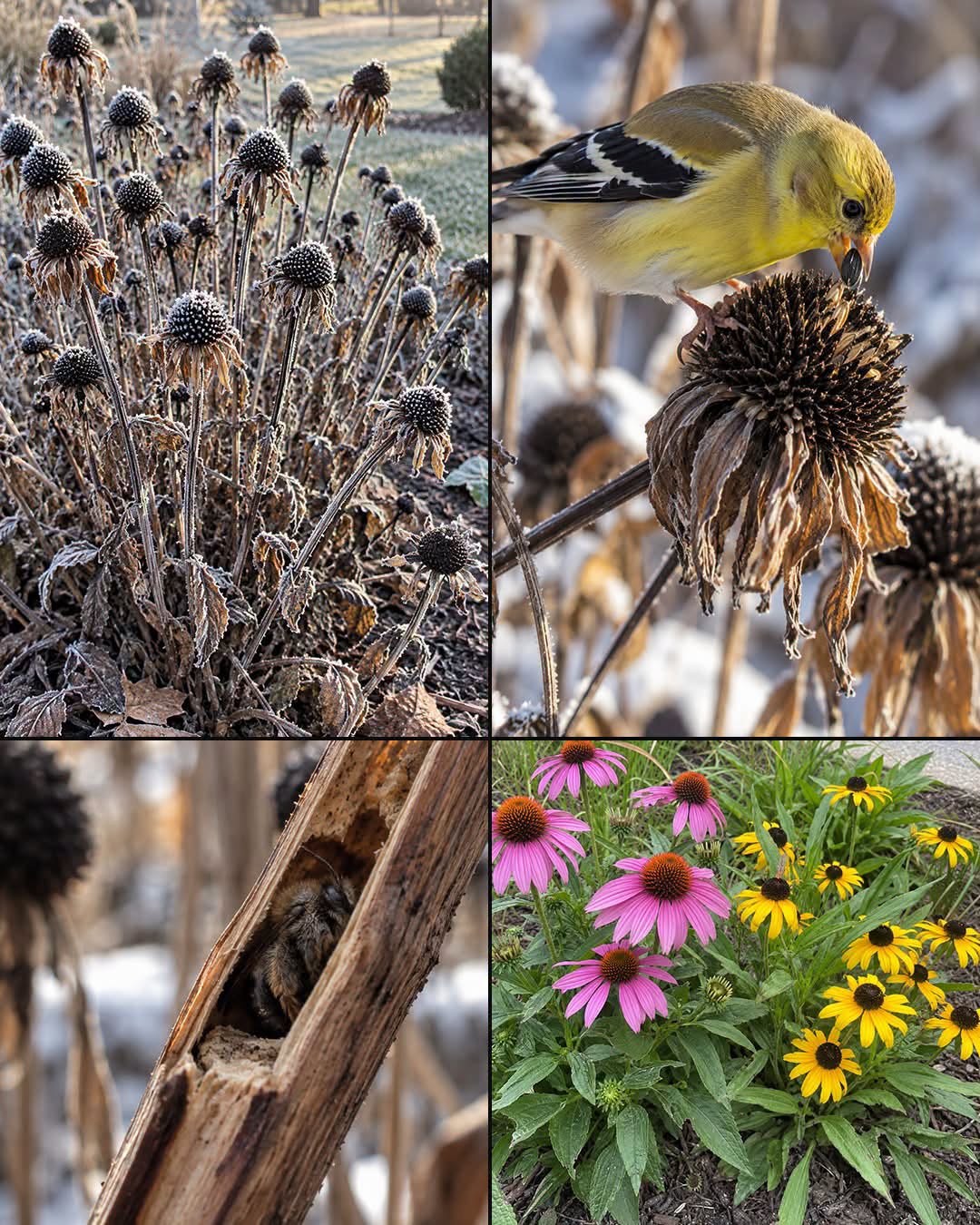
Cut High, Not Low: When you do finally cut the plants in late March or April, do not cut them all the way down to the dirt. Leave about 12 to 18 inches of the old stem standing.
Provide Summer Homes: During the spring and summer, new green leaves will quickly grow up and hide the old, dead stems. Meanwhile, the new generation of native bees will use those old 18-inch hollow tubes as nesting sites for the upcoming summer.
Relocate the Tops: The tops of the plants (the parts with the empty seed heads that you cut off) can be tossed into a compost pile. You can also gently lay them on the ground under nearby bushes so any remaining, late-sleeping insects can safely emerge on their own time.
Taking care of Coneflowers and Black-Eyed Susans is incredibly easy because the best care strategy is simply to step back and let nature work. By putting away your garden tools in the fall and letting the dead stems stand tall through the winter, you create a healthier, more vibrant garden. You get to enjoy watching beautiful songbirds feed on the natural seeds, you provide a safe winter home for essential native bees, and you protect the plant roots from harsh freezing cycles. It is the perfect zero-work gardening method that benefits everyone.
👉 Click the button below to continue reading. (>)
ADVERTISING
ADVERTISING