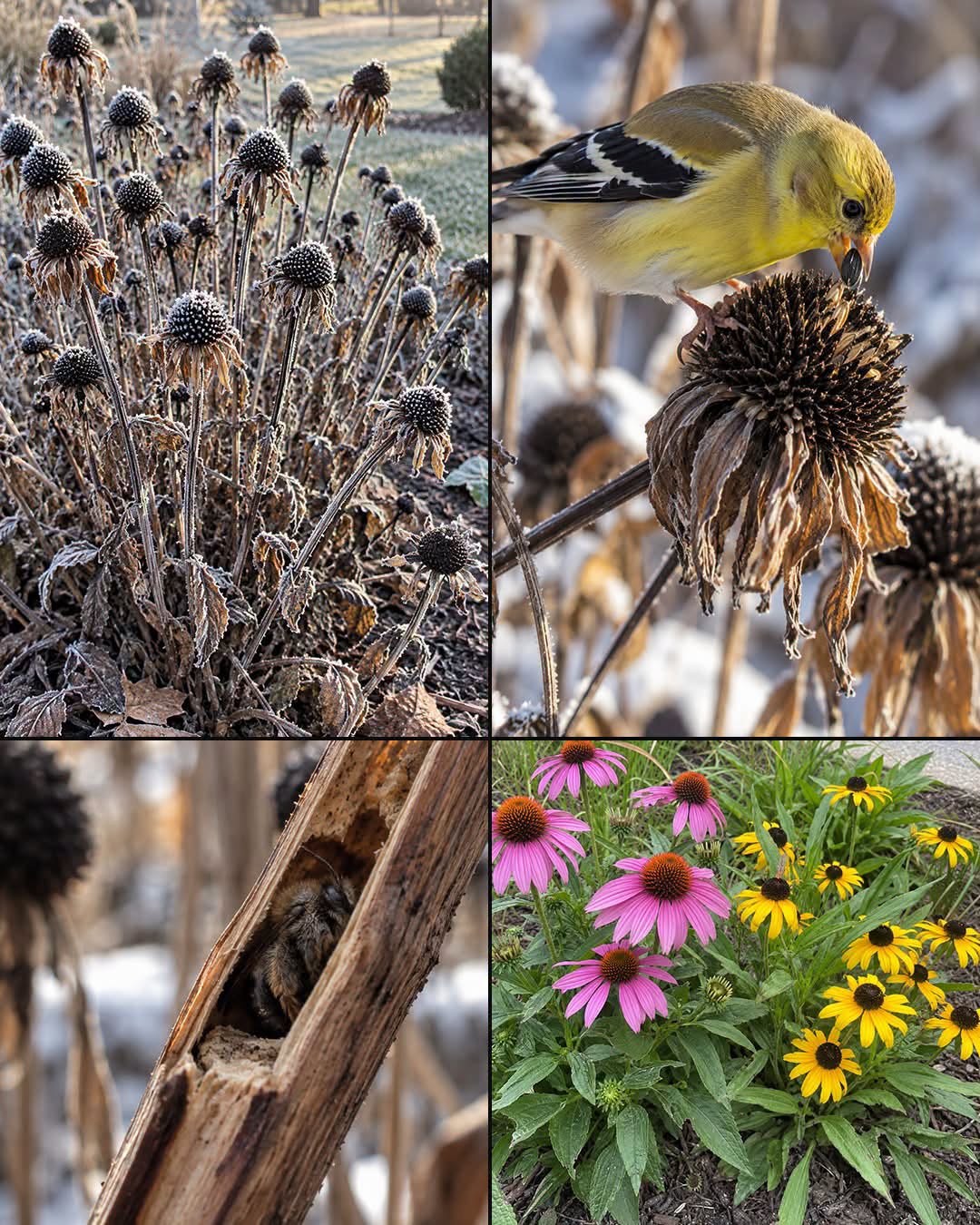
Fall usually means garden cleanup. Many people grab their pruning shears in October to cut down dead stalks, clear away debris, and make the garden look neat before the snow flies. However, when it comes to native perennials like Coneflowers (Echinacea) and Black-Eyed Susans (Rudbeckia), doing absolutely nothing is the best thing you can do. By leaving these popular plants standing all winter, you save yourself hours of hard work while providing massive benefits to the environment and the plants themselves.

Basic Year-Round Care for Coneflowers and Black-Eyed Susans
Before looking at winter care, it helps to understand what these plants need throughout the year. Both Coneflowers and Black-Eyed Susans are incredibly tough, drought-resistant plants that require very little maintenance.
Here is what they need to thrive:
- Sunlight: They need full sun, meaning at least six to eight hours of direct sunlight every day.
- Soil Type: They prefer well-draining soil. If your soil holds too much water and stays soggy, the roots can rot.
- Watering: Water them regularly during their first year. Once their roots are deeply established, they can survive on natural rainfall and usually only need extra watering during severe summer droughts.
- Fertilizer: You do not need to add heavy chemical fertilizers. A small amount of compost applied to the soil in the spring is more than enough to keep them blooming.
- Spacing: Plant them about 18 to 24 inches apart. Giving them good airflow prevents powdery mildew and other common fungal diseases.
The “Do Nothing” Winter Strategy
When October arrives, the bright petals fall off these flowers, leaving behind stiff, blackened stems and dark, spiky seed cones. The standard garden advice of the past was to cut these down to the ground. But modern, eco-friendly gardening has a better rule: leave them alone.
Here is the basic winter care plan:
- Put away the shears: Do not cut the stems in the fall.
- Ignore the dead leaves: Let the base leaves naturally decay on the ground.
- Skip the fall cleanup: Let the plant stand exactly as it grew through the winter months.
Leaving these stiff, blackened stems standing serves three major purposes that protect your garden investment and support the local ecosystem.
Benefit 1: A Natural Winter Bird Feeder
When you leave the spiky seed heads on Coneflowers and Black-Eyed Susans, you are providing a crucial winter food source for local wildlife.
- High-Energy Food: The seeds inside those dark cones are packed with healthy fats and proteins that birds desperately need to survive freezing temperatures.
- Attracting Desirable Birds: American goldfinches, chickadees, nuthatches, and tufted titmice love these seeds. You will see them landing directly on the sturdy stems to pick the seeds out one by one.
- Cost Savings: Providing natural, home-grown seed heads means you do not have to buy as much expensive birdseed for hanging plastic feeders.
- Above the Snow: Because these plants grow two to three feet tall, the seed heads remain easily accessible to hungry birds even after a heavy snowfall covers the ground.

Benefit 2: A Winter Home for Bees and Beneficial Insects
One of the most important reasons to leave the stems standing is to protect vital insect populations. Most native bees do not live in large communal hives. Instead, they live alone, and they need safe, hidden places to survive the freezing winter.
- Hollow Stems: As the stems of Coneflowers and Black-Eyed Susans dry out in the fall, they become hollow or pithy (filled with a soft, spongy center).
- Safe Nurseries: Native bees, such as mason bees and leafcutter bees, lay their eggs inside these hollow stems during the late summer and fall.
- Winter Protection: The eggs and dormant adult bees sleep safely inside the thick, sturdy stalks all winter long, completely shielded from ice, snow, and freezing wind.
- Predator Defense: The tough outer layer of the dead stem keeps the dormant, sleeping insects safe from hungry predators.
If you cut these stalks down and throw them in a yard waste bag in October, you are accidentally throwing away the next generation of pollinators that your garden needs to grow flowers and vegetables the following year.
Benefit 3: Natural Insulation for the Plant’s Health
Leaving the stems standing is not just good for the environment; it is actually better for the plant itself. Winter weather can be very harsh on perennial plant roots.
- Snow Catchers: The upright, stiff stalks act like a fence. When the wind blows across the yard, the stems catch drifting snow. Snow is actually an excellent insulator. A thick blanket of snow keeps the ground temperature around the roots stable.
- Leaf Traps: The stems also catch blowing autumn leaves. These leaves pile up around the base of the plant, creating a free, natural layer of mulch.
- Preventing Frost Heave: Winter brings constant cycles of freezing and thawing. This cycle causes the soil to expand and contract, which can sometimes push plant roots right out of the ground (a process known as frost heave). The natural insulation from trapped snow and leaves prevents the soil from shifting too much, keeping the plant’s delicate crown safely underground.
Spring Cleanup: When and How to Finally Cut Them
Eventually, you do need to clean up the dead stems so the new spring growth has room to push through. However, timing is everything. Do not cut them back on the first warm day of the year.
Here are the rules for spring cleanup:
- Wait for 50°F (10°C): Do not touch the stems until the daytime temperatures are consistently reaching 50 degrees Fahrenheit for over a week. This is the temperature at which the sleeping bees and beneficial insects finally wake up and leave the stems.
👉 Click the button below to continue reading. (>)
ADVERTISING
ADVERTISING