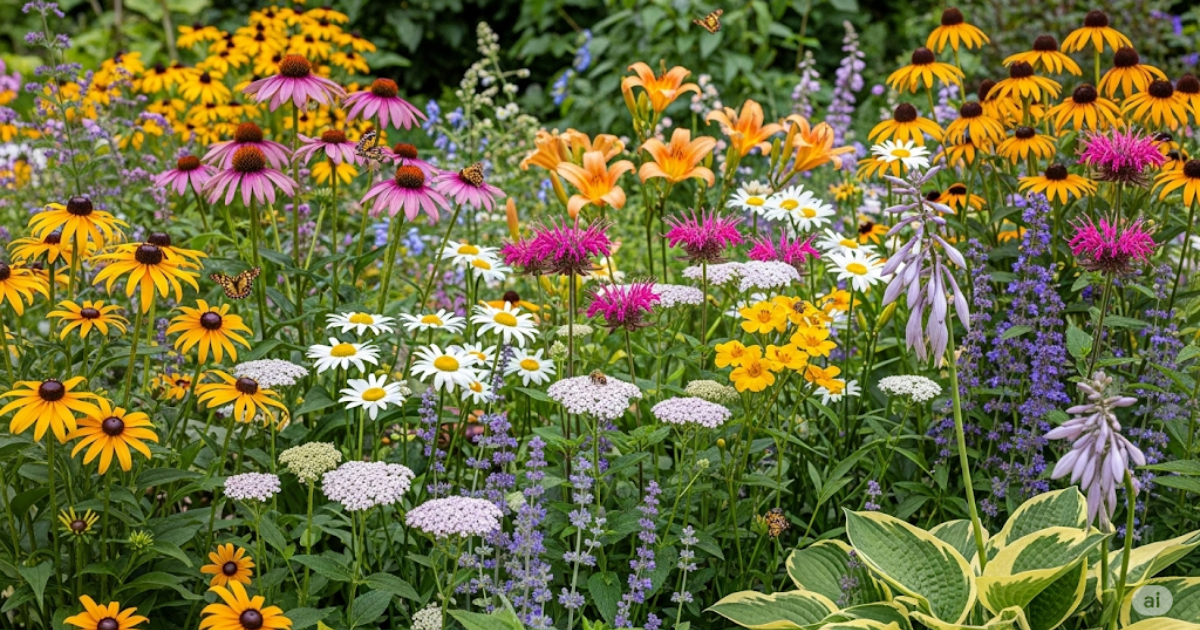
When it comes to building a garden that gets better every year, perennial plants are your best friends. But what if we told you some perennials don’t just come back—they multiply on their own?
Yep, plant them once, and they’ll quietly spread, divide, and reseed without you lifting a finger. These garden gems are perfect if you love a full, thriving yard but don’t have time (or energy) to keep replanting every season.
Ready to meet the overachievers of the plant world? Let’s dig into 12 perennials that multiply themselves year after year—and make your garden look better with time.
1. Black-Eyed Susan (Rudbeckia hirta)
Bright, cheerful, and low-maintenance, black-eyed Susans spread both by seed and underground rhizomes. Once they get comfortable, they’ll pop up in clusters all over your flowerbed.
Why gardeners love it: Blooms from mid-summer to fall, attracts pollinators, and thrives in poor soil.
2. Coneflower (Echinacea)
These tough native perennials are built to survive. Coneflowers readily self-seed, creating little colonies of purple, pink, or white blooms that butterflies can’t resist.
Hot tip: Don’t deadhead all the flowers—let some go to seed for natural spreading.
3. Daylilies (Hemerocallis)
True to their name, each bloom only lasts a day—but the plants themselves are long-term guests. Daylilies form clumps that expand each year, giving you more flowers and fuller beds over time.
Bonus: They’re drought-tolerant and nearly impossible to kill.
4. Shasta Daisy (Leucanthemum × superbum)
Classic white petals with sunny centers, Shasta daisies bring charm to any garden. They reseed easily and form clumps that widen each season.
Garden tip: Divide every few years to manage their spread and encourage blooming.
5. Bee Balm (Monarda)
This pollinator magnet doesn’t just feed the bees—it fills in space fast. Bee balm spreads via underground rhizomes and can form impressive patches in just a couple of seasons.
Watch out: Give it room, or it’ll crowd out weaker plants.
6. Lungwort (Pulmonaria)
Looking for something unique for shady spots? Lungwort’s speckled leaves and early-spring flowers are a treat. Over time, it forms dense, low-growing mats.
👉 Click the button below to continue reading. (>)