- Oven drying
Spread the needles out on a baking tray lined with baking paper and leave to dry at a low temperature (40–50°C) for 1–2 hours, keeping the door slightly open to help the humidity escape.
- Drying with a dryer
A food dehydrator allows for uniform results in a short time. Typically, 1–3 hours at 40°C is sufficient.
The important thing is to check that the needles are completely dry and brittle between your fingers.
Turning rosemary into powder
Once dried, rosemary can be ground into a powder using:
- a coffee grinder
- a powerful blender
- a mortar, for a more rustic consistency
Process in small batches at a time, so the powder will be finer. Finally, sift to remove any longer fibers.
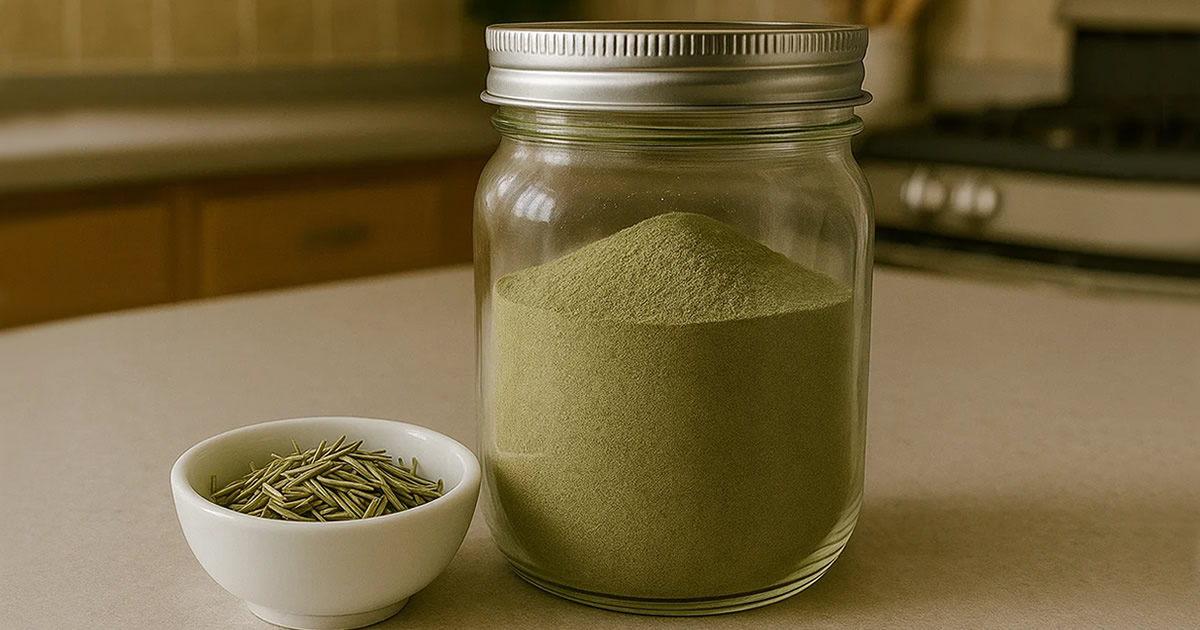
Store the powder in a tightly closed glass jar, away from light and heat. Its aroma will retain its intensity for several months.
How to use rosemary powder in cooking
Powdered rosemary has a more concentrated flavor than whole leaves, so a pinch is enough to flavor:
- baked or roasted potatoes
- white and red meats
- grilled fish
- bread, focaccia and breadsticks
- soups and broths
- flavored oils and salts
It is also a perfect ally when you want to distribute the aroma evenly on dishes.
Making rosemary powder at home is a simple process that enhances an aromatic herb with great potential. With just a few steps, you’ll create a versatile and fragrant condiment that can enhance any dish with a Mediterranean touch.
👉 Click the button below to continue reading. (>)